I mentioned this in another thread. I'm a bit concerned about the possible effect of declaring "cultural appropriation" on poutine and other things.
In my city, and possibly Ontario, and maybe all of Canada, Shawarma Poutine has become a big hit. It's poutine with Shawarma chicken shaved onto it. It's glorious. All the shops I've been to are run and owned by either Iranians or other middle Eastern immigrants.
So to me it's a beautiful success story of immigration in Canada. These individuals are refining a brand new dish by combining middle Eastern and Quebecois food.
If we call it cultural appropriation and wag our finger at it, we possibly lose out on new things like shawarma poutine. What's the fear? That others will embrace and adopt your culture?
I feel less strongly about this part. I'm probably wrong. But I wonder if it has to do with the feeling I felt strongly as a kid. I played Bungie games like Marathon and Pathways before Halo came out. And then Halo arrived and a whole new breed of gamers appeared and made it their thing. They spoke like experts at the lunchroom table. But they didn't grok Bungie and didn't know the origins like I did. And it made me so inexplicably frustrated at them. They were stealing my thing.
Edit: a lot of good responses that have opened my eyes to additional perspectives. If you've gone this far, be sure to read the responses, too!
I don’t feel like anybody is asking for any shop to stop serving anything.
The paper is highlighting the dual identity of being Québecois: whenever Canada celebrates anything Québécois it’s Canadian, but when it’s a bad thing then that’s not Canadian.
I remember the terrible jokes at the expense of poutine when I was a kid. How it was a horrible Québec thing. Now the jokes have stopped because poutine is deemed wonderful, but poutine is no longer Québecois, it’s now Canadian.
That’s cultural appropriation, and the reasonable thing to do is to express its existence, internalize the meaning of this act, and move on. No one should stop serving poutine.
> The paper is highlighting the dual identity of being Québecois: whenever Canada celebrates anything Québécois it’s Canadian, but when it’s a bad thing then that’s not Canadian.
You've hit the nail on the head with this statement. I don't mind that poutine (or any other very Québecois dish) is available in other parts of Canada or the world - heck, I find that amazing! What I do mind is exactly what you've described: when Québec does something good it's Canadian, when it's something bad it's Québecois.
You mean, like when I was a kid and I did something bad and was suddenly described as “your kid”, but when I did something good and was suddenly described as “my kid”?
I, too, must have grown up after the poutine enlightenment. It’s been a delicious comfort food for as long as I can remember!
But mayo on fries? What the hell is that?! :D
Edit: although, back to the idea of cultural appropriation... we have poutine in Saskatchewan, and it’s fantastic, but it’s definitely not Québécois poutine. I spent a week in Montreal this summer and the poutine there is on a whole other level of amazingness.
It's a dish of 3 ingredients, but you really need to get those 3 ingredients perfect. You need very fresh cheese curds, the right gravy (it's a mix of beef and chicken stock as a base) the right size and cut of fries to stay structurally intact when flooded with the gravy.
Poutine is not some elaborate French pastry that has specific a specific recipe that must be followed to the letter. It's the culinary equivalent of the broad side of a barn. It's pretty hard to miss.
Poutine made with slightly over cooked (makes them less prone to breaking apart) frozen fries,shredded Mexican cheese blend and beef gravy all from Walmart is still poutine.
Even though probably everyone in your town eats sushi, a variant that is most likely wildly different from what the Japanese call sushi, people don't go around calling it a Canadian or American dish. Same goes here, I'd say. At its basis poutine was a Quebecois dish, and other people didn't want any part of it. Now it's popular and all of a sudden it's a Canadian staple?
The setting is probably at the root of the issue. The article touched on the question of Quebec being recognized as a Nation within Canada. I guess if you don't acknowledge that part, no need to discuss it further, because Quebec is in Canada, therefore making it a Canadian dish. Without going in the question of independence, I have no problem admitting that Scotland has a different culture than the UK, or Catalonia from Spain, etc. I don't see a difference here with Quebec.
The problem with cultural appropriation is not that the thing is embraced by other cultures, the problem is the incorrect labeling. This reminds me of Borscht, that delicious eastern European beet soup. Is it Russian? Ukrainian? Polish? Ask any one of those nationalities and they will tell you they invented it.
I don't think I've ever encountered Russians claiming they invented borscth. It's more of a case of the west attributing most Eastern European culture to Russia.
The other Easter European cultures obviously put some efforts to maintaining their identity in opposition to Russian dominance in the region.
I feel the frustration at cultural appropriation is not that someone else is enjoying whatever part of another culture exists, or making their twist on it. It's when something is taken out of the culture it existed in with the original culture getting no recognition for their creation. Usually, the original culture is also denigrated. It's a bit like taking an open source product, calling the original creators chumps, and selling the open source product with no recognition that I ever got it from open source while continuing to make blog posts about how great my thing is and those chumps over there suck. In that example the original creators can get a little miffed but they have no real harm. On a cultural level this often is part of bigotry and oppression.
I wonder if that's at the heart of it. I've noticed that this is something that doesn't bug me one bit in the open source world, but it seems to bug some other people a lot, and I never understood why.
It just always seemed so strange to me how obsessed people would sometimes get with the notion of giving credit in the open source world, especially given the consensus negative feelings about things like the advertising clause in the original 4-clause BSDL. I've seen people who simultaneously loathed the advertising clause but were incredibly uptight about (for example) always saying "GNU/Linux", and chastising other people when they didn't, or getting up in arms if some Linux user didn't know about or (in their eyes) properly respect the GNU system by...I don't know. I never figured out what people expect when they have these sorts of expectations of acknowledgement. It always seemed like they were more annoyed at other people not knowing a bit of history, and interpreting that as being some sort of disrespect, or bigotry and oppression as you say.
I always felt like the act of contributing to open source was for me never even remotely a selfish act for which I expected any reward or even acknowledgement. If that's what someone craves in their life, open source is probably one of the worst places to try to get it.
My own lack of caring about this comes from the fact that I never equated any form of disrespect with not "acknowledging" (not scare quotes, just trying to express the ambiguity of what the word can mean to different people) who or what came before. See also endless threads where it's a never-ending argument about who should get credit for "the real work" (whatever that is) when it comes to things like gadgets or programming languages or software or whatever. Example: any discussion about what individual or company should be created with "inventing" the modern smartphone. You start out with someone saying something nice about Apple or Palm or whoever, then some negative Nancy has to jump in and chastise them for not giving credit to some predecessor a la Psion, then another person jumps in and chastises that person for not giving credit to an even earlier predecessor, then eventually people are talking about Dennis Ritchie, then people are talking about freaking Charles Babbage, and everyone's pissed off at everybody. The whole game always seemed like outrage roulette more than an honest attempt to get to the bottom of who deserves credit for what. We all stand on the shoulders of giants, and they became giants by not caring whether or not the people who stand on their shoulders publicly credit them for it. Those who do care tend to get lots of patents and copyrights and other IP protections, which is anathema to open source and a lot of engineering in general.
I think you're right and it's about the context in which the newcomer acts. Immigrants making poutine (with their own ideas blended in) is not appropriation because it's happening in QC (or surrounding areas), but if they did the reverse -- not immigrating but staying put while making Schwarma Poutine in their homeland while flying Canadian flags -- appropriation (on two levels), not unlike festival goers wearing Native garb as a classic example.
This happens to Scottish stuff all the time. When something or someone from Scotland becomes internationally notable for something good, suddenly it's "British". If it's for something bad, though, it'll stay Scottish.
The lynchpin in the 'cultural appropriation' argument hinges on the idea that cultures are static. But this is a fallacy.
All culture is a lie.
There is no such thing as "Quebecois", or "American", or "Austrian".. these are inventions which require the acceptance of a conceptual lie - a non-truth - to be perpetuated - in the telling. The only way cultures persist is to keep the telling of the lie in a kind of continuum. By means of identity, differentiation and association, lies are persistent only as long as they continue to be told, identically, in a fashion which differentiates from other lies, among an agreed-upon association.
Those who would argue for cultural sanctity intend, really, to keep the lie to themselves - or at least, limit its telling to an in-group of their own choosing. In so doing, they intend to limit the mutability of the relevant culture.
Alas, lies don't persist unless you keep telling them - so cultural 'appropriation' is merely a means of controlling the identity of the culture involved within a smaller bounds of association.
I've never tried poutine, but I'd love to. The only way that can happen is if I appropriate a recipe for it, and cook it myself. As soon as I associate the recipe among others in my circle, I have appropriated the 'poutine identity' into my own identity. If I don't differentiate enough between the origin and my source of the concept, say - by sticking only to the recipe and not adding anything else, from other aspects of my identity - then the 'poutine culture' persists. But as I alter the recipe and add my own flair, perhaps by throwing some kren on top, I change the identity. Thus is the nature of lies: in order to persist, they must be continually told, as originally as possible, without alteration.
>Whats the fear?
I feel that the fear expressed by those for who cultural appropriation is unacceptable, is simply this: they lose control of the lie.
But the irony is, culture doesn't really exist as a thing until someone decides to go through the phases of identity, differentiation, and association. Thus, the culture of 'cultural appropriation' callouts is a self-defeating conundrum.
EDIT: I don't expect to get upvotes for this, because its quite clear - none of us like to think we are living a lie. It's offensive. But its interesting that the mechanism of upvote/downvote itself, is a manifestation of this fact. That you don't agree with - you invalidate, and degrade. (Downvote). That you do agree with, which you identify with, persists because you validate it (Upvote). This is the nature of culture: a system of lies kept in perpetuity, by the telling. I'm prepared for my position to disappear completely - I'm also prepared for the ideal to be appropriated without further identification. We humans have the unique ability to choose which lies we want to assist with the perpetuation, and which we wish to destroy utterly. Every culture is susceptible to this dilemma...
Culture is a way for humans to identify themselves in groups and, on a societal level, agree on how to exist. Without some sort of mutual ground in which to meet, it would be difficult to build a society. Cultural appropriation occurs when one culture has taken aspects of another culture without citing their sources, and often occurs in context of the second culture being treated as a lesser culture by the first. This is one of the ways multiple cultures can conflict with each other.
There's nothing wrong with adding your own spin to cultural artifacts so long as there's respect for the people it came from. The lack of respect is where appropriation comes in.
That is to say, there's no truth in culture; it's not a lie, either. It's completely on a different paradigm than can be assumed as objectively true or false. Therefore the negotiations between cultures also function on different paradigms. This black and white thinking is too narrow to appropriately incorporate the nuances of human social dynamics.
I really don't agree with you, and I think the nature of this disagreement between us is a significant cause of trouble in the world. There are some who are fine with living a lie; there are many who think their lies are the only truths. I believe cultural appropriation to be positive, because its a means by which the falsehood of cultural identity can persist.
In the big, wide universe, there really isn't any such thing as "America" or "Sweden" - these are creative inventions of humans, the only living things in the universe known so far, to lie to themselves in such a fashion.
Cultures don't exist unless the lie is perpetuated by those who have a self-interest in the identity.
Where I do agree with you, is that people need to have respect for each others lies. Without that, we end up with conditions whereby nobodies lies persist - i.e. war. I just happen to think that its possible that appropriation is a form of respect.
Not addressing your point directly (I thought it was interesting). I would recommend you simply replace the word "lies" with "stories," or "fictions". You might find people more willing to engage you constructively, and less willing to downvote you.
I think 'lie' is the appropriate word, and the reason is because it really is a lie - a non-truth - which must be continually told in order to persist through time. There is no such thing as culture, until we say "this behaviour/activity/ideal is culture" - it's not a part of the natural world, but rather an invention of a human mind, creating something in order to entertain/amuse/protect itself.
Perhaps 'fallacy' could be used just as well, but I feel that people don't understand the word well enough.
"Here is an empty space. I shall call it 'Golliginamipopo'".
It is un-true that the space is 'Golligaginamipopo' - unless I can get at least a few others to agree to call it that. At that point, it becomes a "collective truth", but nevertheless: this isn't really what the space is. Perhaps someone else has a name for it. Perhaps there is no name at all (the default state of every point in the universe).
The downvotes actually help prove the point and are useful in this case. People don't agree with my lie. :)
I wonder, did you develop this idea yourself? I ask because it sounds similar to the central idea in the book Sapiens, and if you haven't read that I expect you'd appreciate it. At least for the sense of satisfaction you might get at your idea having broader recognition, but also because it's an interesting book. Sapiens discusses that countries are lies, money is a lie, every human organisation is a lie. (I use your terminology here, IIRC the author uses the term "collective fiction"). I found your comment interesting because you consider culture as a collective fiction, but I think you might be right that there's a difference between a self-identifying culture; and a non-self-identifying culture. Which, for me, raises the question: is the latter type an unspoken collective fiction, but a collective fiction nonetheless? And what are the practical differences between the two. Especially: does one type persecute outsiders more than the other? Should we try to avoid self identifying cultures as a rule? If so, when should we make an exception? Anyway, perhaps I ought to turn my armchair sociology into a reading list.
Thanks for the book recommendation - I'll definitely read it. To be honest I feel like this idea is a natural law, so I didn't develop it - just made the personal observation as a consequence of abandoning my own born-culture, adopting another, abandoning it, adopting another, etc. as I've moved around the world to live.
>Which, for me, raises the question: is the latter type an unspoken collective fiction, but a collective fiction nonetheless?
I would say, yes. Because its a natural law - there is no such thing as human culture, unless we perpetuate it in the telling - and this is why I chose the word, quite carefully, lie. Lies have to be re-told in order to persist.
Collective fiction is a great phrase, and I will integrate that into my thinking. :)
>And what are the practical differences between the two. Especially: does one type persecute outsiders more than the other?
I think the human mind identifies, associates, and differentiates - and that each of these activities can either support perpetuating collective fiction, or deny it. To the extent that the individual recognises that they are indeed perpetuating a fiction, determines the 'detriment' to other individuals who are also capable of the same feat, albeit within their own identified cultures.
>I ought to turn my armchair sociology into a reading list.
People downvote because you're saying that culture is a lie when it's the incorrect word. You're not wrong per se, you're using the incorrect word. Others point that out to you, and you still insist on using the word lie. You double down on your error and say that you must be right because everybody else says you're wrong.
Sorry but I disagree. Lies have to be told and re-told in order to persist, they are not the natural order of things, a base truth. This is the nature of culture, also. Culture doesn't persist unless the human mind identifies with it, differentiates and associates it from other cultures.
The downvotes are actually a manifestation of this point.
There also is only an arbitrary artificial border between a branch and a leaf or the tree and the ground it grows from.
You're right that in ultimo, all these distinctions are artificial and determined by humans - but they have use in our interactions and survival.
Culture is significant in those interactions, if you met a random person somewhere in the wilderness and your survival is dependent on not offending this single person, culture suddenly becomes a very real thing to you (despite that person probably being pretty friendly and hospitable in reality).
For most of us, in highly specialized and commoditized societies with lots of intercultural communication, these boundaries have blurred somewhat but it doesn't mean the concept is entirely inapplicable.
I thought this would be an examination of the fluid dynamics of poutine, perhaps a revelation that fully-integrated poutine dishes are non-Newtonian fluids.
Additionally: given the heavy cultural significance ascribed to poutine by this “paper”, would it follow that the import of poutine in US places like New York under the name “disco fries” constitutes an egregious form of cultural appropriation and erasure?
The title is fun, but this is a terrible paper. Yes, Canadians poke fun at Québécois, and sometimes poutine is used (but rarely these days given its popularity).
But a big part of Canadian culture is being “in on the joke”. We tend to love it when we’re satirized in the media, particularly American media. I think this appreciation for jokes made at our expense is partly responsible for our high volume of comedian exports.
So we make fun of BC folk, they make fun of Torontonians; Quebecois make fun of Acadiens; we all make fun of PEI. It’s not done from malice, just good-natured ribbing about our differences.
This paper is a great example of research-free critical theory.
> It’s not done from malice, just good-natured ribbing about our differences.
I'm Québécois. My family has been Québécois for hundreds of years. My first language was French but I spoke English from a very young age, and went to a mixture of English and French schools. I watch Québécois movies and tv shows, listen to Québécois music and radio, and cook traditional Québécois food for myself and friends every chance I get.
I can't vouch for any of the other Canadian subcultures you've named, but I can assure you that I never enjoyed the taunting, the name calling, the literal physical violence (I got beat up many times as kid because I was "one of those fucking French frogs"), and not to mention the inevitable eye rolling and pointed questions about why my particular cultural heritage was even allowed to exist in Canada.
Some people view us as some sort of blight that needs to be eradicated because we don't fit the mould of what a "Canadian" is. I've had people tell me to my face that they "can't wait for the French to just die off in this country", and then laugh because they think it's a funny joke.
I'm not saying everyone is like that, and things seem to have softened in the past few decades, but please don't believe that we enjoy being marginalized.
Hearing a 20-something Albertan casually reference "frogs" made the bottom drop out of my stomach. (This was the better part of 20 years ago.)
They'd never call someone that, face-to-face out on the patch, but the disdain was apparent.
And the superficiality. Montreal is one of my favorite cities -- warts and all. (No pun intended, although now I see it.) This person reduced to using the term "frog" had never been to Quebec and had not even taken the time to learn the basics about the place, people, and culture.
Canada has assholes, like everywhere else. Fortunately, on balance, I've found Canadians a lovely people. Not perfect -- but then again, not particularly trying to be, either. Good, not "perfect".
Or so, as an American, I need to hope. Some place better than what we are becoming.
The wheel turns...
P.S. Shawarma Poutine. Whoever's appropriating what, I've made a mental note, for the next time I'm up there.
> Hearing a 20-something Albertan casually reference "frogs" made the bottom drop out of my stomach. (This was the better part of 20 years ago.)
Still happens today, really. Lots of casual cultural/ethnic (if you consider Quebecois an ethnicity, which is an argument that can be made) racism that is somehow okay. Like how the Irish are often derided as being a bunch of drunks; I'm sure they love that.
I think it got better for a while due to social mobility and the ease of travel - it's harder to blindly dislike or hate a culture when you actually spend some meaningful time immersed in it. But with the recent rise of very nationalistic tendencies across many countries (Canada included, sadly, and from both the French and English populations), I'm worried things will regress.
> P.S. Shawarma Poutine. Whoever's appropriating what, I've made a mental note, for the next time I'm up there.
Oh it's delicious. And as someone pointed out earlier in the comments, I wouldn't call that appropriation. There's a heavy Lebanese/Middle Eastern influence in cuisine, especially in Montréal, due to the partially shared language (French is a common 2nd language for people that live in Lebanon).
I mean hey - that really sucks. It sounds like you've met some shitty people.
It doesn't change the fact that good-natured ribbing is really common in cross-cultural contexts. I grew up in Ottawa, a really bilingual city, and making fun of each other was part of how we all bonded in spite of our differences.
Intent matters, but so does being aware of the effect of "punching down". Ontario, specifically Ottawa and Toronto, dominate so much in Canada, that people in repressed Quebec, impoverished PEI, or one of Ontario's western colonies may not appreciate it as much as you think.
That said, I think the tartiflette to be superior (seriously, look it up). You just can't get the special "mountain cheese" (Reblochon) at a reasonable price here.
Just saying, speak for yourself, I know I'm not the only one who doesn't like to be steriotyped by ignorant people for laughs based on my nationality.
As for the regional steriotypes about different provinces being 'fun' or 'lighthearted,' that is not always the case and many of them are rooted in historical military or political conflicts.
Cultural appropriation of foods is completely natural and should absolutely be encouraged... Do we really want southwest/mexican food without herbs based in europe and spices from the east? Or, for that matter, removing tortilla chips, or flour based tortillas. It's absurd to try to stop, and at a net loss to society to do so. It's been happening forever and it's a net good.
Living in Northern Ontario, I'm no stranger to Poutine. All sorts of places are popping up selling 'flavoured' poutines. Nothing beats the original. In fact, the best poutine is found at chip stands with suspect food handling standards. Not in fast food places nor even restaurants.
My personal favourite comes from the bush town of River Valley Ont. My god I could go for one now and it's only 8:30am.


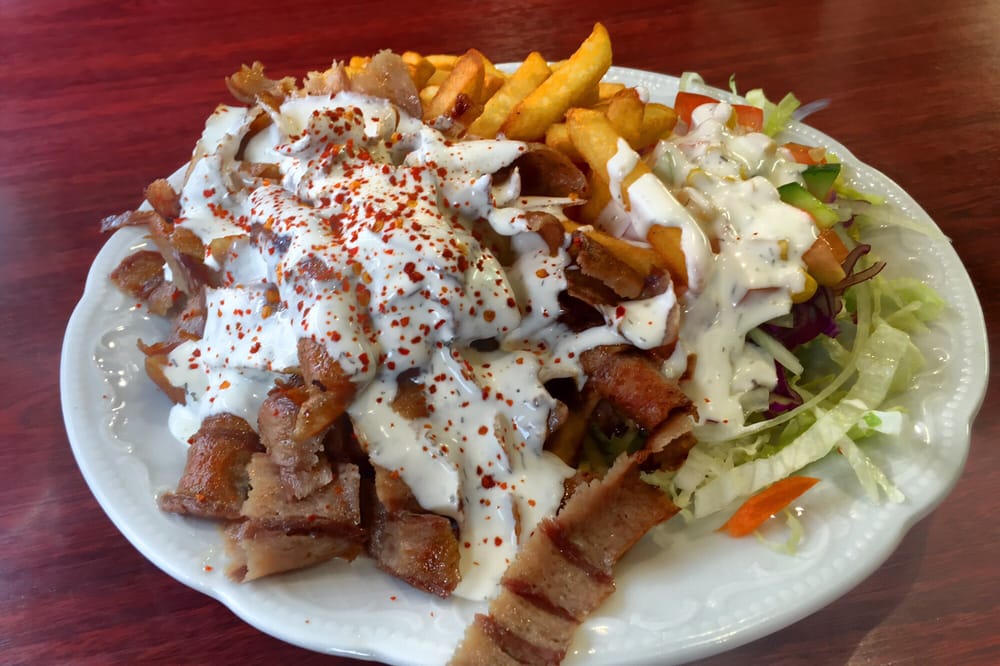

In my city, and possibly Ontario, and maybe all of Canada, Shawarma Poutine has become a big hit. It's poutine with Shawarma chicken shaved onto it. It's glorious. All the shops I've been to are run and owned by either Iranians or other middle Eastern immigrants.
So to me it's a beautiful success story of immigration in Canada. These individuals are refining a brand new dish by combining middle Eastern and Quebecois food.
If we call it cultural appropriation and wag our finger at it, we possibly lose out on new things like shawarma poutine. What's the fear? That others will embrace and adopt your culture?
I feel less strongly about this part. I'm probably wrong. But I wonder if it has to do with the feeling I felt strongly as a kid. I played Bungie games like Marathon and Pathways before Halo came out. And then Halo arrived and a whole new breed of gamers appeared and made it their thing. They spoke like experts at the lunchroom table. But they didn't grok Bungie and didn't know the origins like I did. And it made me so inexplicably frustrated at them. They were stealing my thing.
Edit: a lot of good responses that have opened my eyes to additional perspectives. If you've gone this far, be sure to read the responses, too!