Many of the comments here seem to be focussing on increasing grip strength but that misses something the article could have delved into more. Grip strength is strongly correlated with health and longevity, but its not directly causal - simply increasing your grip strength wont really add many years to your life. Instead grip strength is strong correlate with overall musculo-skeletal mass and strength, which does have a highly causal relationship with health and longevity. So, focussing purely on grip strength will do more to break the correlation than give you a long life.
If you want to have a healthy, long life focus on overall strength. Squats, deadlifts, odd-object carries etc. If you're new to lifting, have someone who isn't show you proper form. Or just read Starting Strength by Mark Rippetoe. Its the bible of heavy lifts.
Source: I can deadlift more than 3 times my bodyweight while still having a 7 min mile.
> If you're new to lifting, have someone who isn't show you proper form.
I cannot emphasize this enough. And even then, be extremely careful with heavy lifts (anything more than, say, what your body weight would be at 20% body fat).
I worked regularly with an extremely good Rippetoe-certified coach. My form was better than most of the beginners you see in the gym. At 40, I was stronger than I was as a high-school athlete, and it was an amazing feeling.
But one day, a 245x5 squat set went very slightly weird. Two days latter, I had tingling and numbness in my foot soles. It turns out that I'd aggravated a relatively minor disk bulge at L4/L5 (about half the population has a disk bulge there). And now I've been in moderate pain for close to three months with very slow improvement.
The long-term prognosis is excellent, as far as I know. I will almost certainly heal. I know plenty of people who've done worse to their backs and who are fine today.
But heed my example: If you're going to do heavy lifts, especially deadlifts or squats, make sure your form is as close to perfect as you can get it, and remember that you can't eliminate all risk.
One thing I have noticed: There are no 55- to 70-year-old powerlifters in the gym. But there are old bodybuilders who've been lifting for 40+ years with only the rarest of injuries. They're careful, and they say things like, "I don't like the risk/reward on heavy squats." When I return to serious lifting, I'm considering on giving up on powerlifting and switching to a more bodybuilding-centric program.
"One thing I have noticed: There are no 55- to 70-year-old powerlifters in the gym. But there are old bodybuilders who've been lifting for 40+ years with only the rarest of injuries."
I've noticed this as well, and I've heard it correlated to having an aim in the gym vs sticking to your regimen. That the body builder has an aim, and if something hurts a bit they'll work around it and let it heal. While a powerlifter will push through it (sticking to their routine) inevitably ending in injury.
The point being, don't give up power lifting.. but listen to your body and move away from the PUSH IT/Deviation from routine is failure, kind of attitude.
>> One thing I have noticed: There are no 55- to 70-year-old powerlifters in the gym
I don't see too many people over 50 in ANY gym. When I hung around PL gyms however I did see older lifters doing their thing, obv. concentrating more on reps but still competing. The kicker is in that age 50+ group just getting out on the platform gets you some kind of a trophy :)
Back injuries suck. Get an inversion table if you don't have one yet.
Sorry to hear about your back, glad that you're gonna heal.
One note about 55-70 year olds powerlifting vs body building is that they tend to be a lagging indicator since people don't usually start late in life. Also, in the 80s and 90s, bodybuilding was far more popular than powerlifting, so it would make sense that there'd be fewer people in that age category powerlifting.
The same thing happened to me about 4 months ago except it was deadlifts. I think I somehow let my back rotate a bit when I was on my way down. An MRI revealed a slightly bulging/dehydrated L4/L5 disc. My leg days have since been infrequent and very light with no deadlifts at all. My chest is looking better than ever though...
The sad thing is I haven't been doing a powerlifting routine at all. I decided a couple of years ago when I started lifting that I'd rather look good than be able to lift super heavy weight. I was only deadlifting about 1.2 times my body weight.
This HN comment thread is a day or so old so perhaps you won't read this, but as someone who had an L4/L5 bulge 14 years ago, my most emphatic recommendation is that you walk as much as possible.
Certainly you need to do all of the rehab/prehab strengthening exercises you can - and you need to do them for the rest of your life - but the real turning point for me and that back injury was beginning to walk regularly.
Your body (and your back) are built to walk. Walking will heal you. Yes, it might hurt more and be uncomfortable for the first week or three, but after that, everything tightens up and fires up and tones up ... and all the pieces of your spine put themselves back into place.
I am over 40 now and have been doing (relatively) heavy squats and straight leg deadlifts for the past ten years. Totally asymptomatic.
I've been coming to this train of though myself. I still want to lift, to have my bone system deal with weight pressing on it. But I don't want to injure myself. I've had a few small things that kicked me out of the gym for 1-2 months. I worry what a bigger one would look like.
Does your 20% heuristic change at all for the type of lift? For me that would lead to a bench press near my PR, but a squat and deadlift far below. So bench would feel a bit overpowered if they're all the same. But then again, bench seems less risky.
I wouldn't trust my heuristics for what counts a "heavy lift." And some of this is clearly age dependent—I may have been stronger at 40 than I was at 20, but I don't heal nearly as fast!
But I think most people have a danger zone. This is the point where screw-ups start to get dangerous, and you don't want to be doing sloppy deadlifts or squats with a wobbly core. For some people, this might be two plates. For others, it might be the first time they have to reset their deadlift. Or it may be the point where you start getting minor injuries. (It may also depend on genetics: I have reasonably robust shoulders, but an unusually short sciatic nerve and easily-annoyed pyriformis muscles.)
If you're self-taught using videos or books, then when you reach that point, I would recommend paying for a serious powerlifting coach. A lot of self-trained lifters have way too little core tension, or are making other dangerous mistakes. Personally, I worked with a Starting Strength certified coach who was excellent, and who fixed all sorts of mistakes I was making—but it still wasn't enough.
Depending on how completely I recover from this injury, I might just freeze my deadlifts and squats at 225x5 permanently, and focus on a safe subset of bodybuilding lifts. But I do recommend talking to older lifters, and asking them about how they avoid injuries. I've known some admirably buff 55- and 65-year-olds with good injury histories—but they seem to focus on a combination of moderate strength and aesthestics, not on raw powerlifting totals.
Overall, weightlifting is statistically one of the safer sports. But injuries are just a miserable experience, and I encourage people to think about these issues before they're forced to learn about spinal anatomy, MRIs and anti-inflamatory drugs (or about rotor cuffs).
Thanks! It's the healing that worries me. I'm 31. Still strong, but I don't bounce back as fast as I did at 20.
I think up to about 160 it's hard to injure myself with squats or deadlifts. I weigh 150 and am lean. I might just stick around there. It still produces a good physique + strength for me.
I've also been considering sandbag exercises at home after reading about it in this thread. I started bouldering recently as well, which seems to have a more manageable risk profile if I approach it incrementally. (But I need to research that)
My advice to almost everyone is to prioritize consistency and enjoyment over perfect planning. For almost all working professionals, their plans fail on consistency instead of selecting optimal exercises. If you like bouldering, give it a shot. Jiu-jitsu / wrestling is another good activity that'll keep you strong. You'll be better off with either of those than a lifting regiment where you miss days often.
As for weightlifting, the problem people have with handling heavier weight isn't necessarily knowing the form, but being able to keep form as their numbers go up. Core strength is one of the most obvious problems, but you can also have other muscles that aren't quite as strong and those deficiencies become problems when you're doing heavy compound lifts. A good coach won't just teach you form, but identify the areas you need to improve in order to safely handle heavier weight.
If you want to pursue weightlifting / powerlifting, my best advice is to find a gym with a lot of lifters you can make friends with and elite level lifter or two. You'll pick up a lot from observation (in addition to the coaching you get) and the social aspect will make it easier to keep coming back.
This is patently untrue. Provide some data or get out of here. Squats are universally accepted as one of the best natural movements of the body to train.
But neither is loading 3x your bodyweight onto your spine "natural". What does "universally accepted as one of the best natural movements" mean? - As you suggested to the previous comment, please "Provide some data or get out of here".
It all depends on your objective and goals. As with everything moderation is key. A balanced program of squats, deads, pushing exercise (chest/pecs) and a pulling (back/delts) is best for oevrall muscle, bone and tendon health. Whether you do this via free weights, body weight, or machines is really not material.
Rippetoe style heavy free-weight squats, squats and more squats is not the be all and end all of resistance training. Personally, I got into heavy strength training with Rippetoe's books and videos - and, IMHO, he did a great service by educating people about the benefits of heavy (free weight) strength training using a very very simple ('KISS') type program (at a time when the focus was on machines and overly complicated routines). His routines are great for beginners - especially very young ones - hence why they are copied and 're-mixed' so much (like Stronglifts 5x5 and countless variations thereof).
And I would really not suggest heavy squats for improving grip strength - that would be a very inefficient way to train your hand grip.
i agree that squats CAN be good for you, but I am stating that the risks outweigh the benefits. Just one bad form squat in your entire life, and you can permanently damage your knees or back. there are much safer exercises that train the same muscles.
as far as provide some data or get out of here, unfortunately I do not know of any good data source on weight lifting injuries and hazard rates.
The best I have is baseball, the toll being in the squatting position takes on players knees is, to use some of the language you have used, 'universally accepted'.
I used to do a lot of lifting. Did the Starting Strength which was awesome and definitely the most enjoyable regime.
However I just got a bit bored of it all and kind of felt like I always had my ear on the ground for something more interesting, or technical (I do miss squats).
To get to my point I started climbing a few months back and it has totally hit the spot for me. It is incredibly technical, you have both indoor and outdoor options, and you also build incredibly functional strength. Including improving your grip strength more so than in any other sport.
This is totally anecdotal, and of course climbing gyms are not as common as normal gyms. But just in case someone is reading this and wants to give something else a try I highly recommend it.
Also you get to buy some cool gear which is always nice.
Also started climbing a month ago, after having enjoyed trying it like ~5 years ago (but no gyms where I lived).
It's incredibly satisfying. A mix between problem solving and physical exertion. I've never been a gym rat but I'm excited for my skin and grip strength to return so I can go back every 2-3 days and nail that next level of difficulty.
I recommend climbing on so many levels, and for some reason it seems to 'click' particularly well for a lot of programmers.
Most obviously, it offers some whole-body fitness that I don't find boring. But I've gotten a lot of secondary benefits that are hard to pass up. It's gotten me into normal weightlifting because "to climb better" is a clearer motivation than "to be healthier".
And it's a fantastic way to build strength comprehensively. As soon as one body part (bicep, wrist, hip flexor, whatever) taps out you'll struggle to keep going, so you tend to develop whatever is weakest. There's a lot of incentive to work flexibility, too, which can be dangerously ignorable for new weightlifters.
>> But just in case someone is reading this and wants to give something else a try I highly recommend it.
Completely agree.
I just started out and we have several indoor climbing places where I live. I've been trying to find an alternative to having my body being beat up playing hockey two to three times a week and thought this was a good alternative.
First of all, it doesn't cost a lot to get involved. I've found it works my whole body out, engages my brain in a way hockey simply can't and has really made me focus on how my body moves since my grip strength just isn't there yet. So far, I like it a lot and would also recommend it to anybody.
To be honest, I got a bit bored of pure strength training a few years ago and moved to crossfit. Since then my lifts have almost doubled and my form has improved too.
I think you're doing the absolute right thing with climbing. Its not about finding the most optimal physical return on investment for an hour of work but finding something you love so its not work at all.
Is this a joke? Heavy lifters and bodybuilders don't live a healthier or longer life—they generally die younger and have more health problems.
The scientific consensus is that endurance exercise like walking or running is much better for you than lifting (in terms of longevity, cardiovascular and health benefits).
Top 25% doesn't sound all that great given how many are totally incapable of running a mile in any time. I once looked up my swimming pace for a typical workout (15min x 5km). That's well within the top 0.1%. Navy SEALs dont swim that well. But given that probably less than 1% of the general population swim any laps regularly, it isnt saying much.
Fyi, if you want to feel good about your swimming, lookup the youtube vids of the navy seals swimming standards. I know 12yo kids who could pass them. Their pace wouldnt even qualify for the 'fast' lane at my local lap pool (50m/minute).
SEAL operators aren't selected for pure speed - they want the guy who is capable of swimming 20 miles after being awake for 48 hours, if that were to be necessary. There's a (high) baseline level of fitness, but more than that it's about insane willpower, esprit de corps, and ability to handle stressful situations.
Ive had this discuss with drill a instructor. He asked, barring hypothermia, how far a competative swimmer could go before drowning. My estimate is something like 100km. Swimming slowly, say 0.5m/second, is easier than walking for such people. They would be dead of dehydration before they drown.
Your statement about 12 yo kids is an understatement - while I'm plodding along doing 50m every 45 sec (admittedly over a distance), the 12 year olds from my local club are leaving me standing. They're probably aiming towards 50m in around 30 sec.
I'm sure the special forces guys are much bigger and heavier than that and as another commenter said, speed will not be their top priority.
50m in under 30, and 100m under 60, are a sort of baselines for when swimming gets serious.
In the SEALs defense, such speeds are horribly inefficient for even the best swimmers. Water gets very thick, with each second below those times requiring a redoubling of efforts. Seals care mote about distance and survival than speed.
Wow! That seems like a pretty slow swimming pace to anyone who has swam in a competitive settings. It is shocking that that pace is top 0.1% of swimmers.
But your observation seems accurate, not many people swim.
1km in 15minutes, five times in a row. My freestyle cruising pace is 45s/lap. In reality, my routine is slower than that due to drills, kicking, and other strokes. But on occassion i do 5 or 10 km of freestyle just to time myself.
There is a myth that physical ability is a trade-off against mental ability. You see this in the slogan "sleep is for the weak" and in the stereotype of the nerd as sedentary. It is a myth--the brain is a part of the body and by nurturing the body you support the brain.
Taken to extremes, though, there is a trade-off. Keeping generally fit is probably within the reach of most nerd-types and helpful for their mental state. However, actually being physically competitive at a high/elite level requires investing a lot of time in training, diet plans, etc. Similarly, being an elite programmer (or anything else) requires investing a huge amount of time in the craft. I imagine that people who manage to achieve both peak physical fitness and peak mental ability are rare outliers.
The stereotype of nerd as sedentary applies to me, to an extent. I think this is because, genetically, I have a number of physical problems, and also come from a poor background. For most of my youth, I was unable to achieve at a competitive level due to these problems - I have never won a single race, medal or trophy (as where I am from, they are only given out for sporting achievements). However, when I got a computer, my life changed. Suddenly I could create and achieve using nothing other than a keyboard and an internet connection. So in my case, the sedentary nature of my existence probably drove me toward computers, rather than the inverse.
"I imagine that people who manage to achieve both peak physical fitness and peak mental ability are rare outliers."
I know quite a few people here in SF that do both. I used to be a state-competitive athlete in Pennsylvania, but I can't even keep up in SF with the times that a lot of my fellow nerds here throw down in Strava (still have a few though, running up the hill on Misson St, one lap around Bernal Heights Park, and running through Almaden Quicksilver Trail San Jose!).
High school athletics is a good way to get into a good college, when you already have academics on par with the majority of applicants (otherwise, it's a crapshoot to get into Ivy League schools with <10% acceptance rate and >90% of the applicants have near-perfect SAT scores).
> Taken to extremes, though, there is a trade-off
That's some circular reasoning.
YMMV, but maybe consider making fewer excuses for your "inability" to perform physically and stop diffusing blame in every direction except the right one (i.e., at you).
Actually, I don't care what you do or think personally, but (assuming you are commenting in good faith...) your demoralizing and plain wrong statements about a putative inverse relationship between mental and physical fitness, and your funny rationalization of your failures, are exactly the kinds of bad cultural tropes that are malforming the bodies and minds of what should have been the healthiest and most performant bunch of homo sapiens to crawl the planet.
Where is the circular reasoning? There are a fixed number of hours in the day, and I presume that becoming elite at either a mental level or a physical level, for most people, requires focus for the majority of your waking hours. My assumption may be wrong, but I don't see any circular reasoning. Note that I say that I think most people can achieve a good general level of fitness.
As far as my own issues go, I think you're speaking from the perspective of someone who has no medical issues and assuming that everyone else is similarly healthy. I have rheumatoid arthritis and hypermobile ehlers-danlos syndrome (amongst other problems). I try to keep fit, have special shoes and joint supports, do everything my physiotherapist tells me to do, and I exercise fairly intensely for at least an hour a day. But ultimately, I have physical limits that despite continual medical intervention, have proven resistant to treatment besides painkillers. In the last month alone, I've been to hospital 6 times. There's a good chance I won't be able to walk more than a few hundred metres by the time I'm 30, and currently if I try to push myself too hard, I typically end up injuring myself and needing to go to hospital.
A computer, for me, and other people like me, can be one of the most transformative purchases of our lives. On a computer, nobody knows you're disabled and you can do almost everything that an able-bodied person can. Arthritis can be a problem, but heated gloves help a lot with that.
I think this myth emerges from the high-school jock vs nerd archetypes. The HSJ spends his time training, chasing chicks and neglecting his studies, while the more studious get on with their school work. Of course in reality you have smart people that are all-star footballers and stupid people who study, but I guess the less nuanced picture still dominates people conscience. I guess particularly because the school years are most formative.
To add to that, lifting heavy weights causes the central nervous system to fire off huge amount of electrical signals to muscle groups. While this does cause fatigue which can leave you feeling "hazy", I would not be surprised if it improved cognitive endurance for other tasks. And I have to comment on the irony of sleep being the most important factor in muscle recovery, along with a good diet.
> It is a myth--the brain is a part of the body and by nurturing the body you support the brain.
Is there any evidence backing this up? I hear it proclaimed a lot, but there are plenty of examples of brilliant people who are not physically strong, such as Stephen Hawking.
> There is a myth that physical ability is a trade-off against mental ability.
It's not a myth that time you spend, e.g., in the gym is time that's not available for, e.g., programming practice, and vice-versa. Ability beyond raw potential takes time to devop and maintain, and time is a limited resource. TANSTAAFL.
How heavy are you may I ask? I am 90kg, I can do a mile in 5.45 (tested in an army reserves fitness test) and don't feel I can deadlift more than 220kg safely, but then again I can do many reps of that.
Thanks for this. I was baffled to see so many comments explaining how to "fix your grip strength".
It's not a bad thing to do, as a climber I care a lot about grip strength, but it's not a significant total-health goal. Grip strength is highly predictive partly because people don't train it, and so it represents overall fitness and muscle development. Working hand strength in isolation just breaks that predictive relationship without producing the overall health improvements that come from an active life and whole-body fitness.
If you want to live a long life, weight lifting is counterproductive, especially if you become very massive.
Instead, you want to be small, fit, and not eat much (which means not doing unnecessary exercise). For example, this paper discusses how caloric restriction extends life spans for rodents, primates, and humans across the board: http://www.sciencedirect.com/science/article/pii/S1568163716...
Living a long life isn't the goal. Living as long a life as you can while at optimal health is. Being a small runt who doesn't eat much and who is always sick isn't a very admirable goal. The inverse correlation with grip strength and all cause morbidity is likely related to people with strong grips are sitting at their desk with Captains of Crush grip exercisers. They are likely in the gym, doing deadlifts, working with physically demanding objects, etc.
Our push to extend life span has resulted in us being old, pathetic weaklings. A long life that has the last 20 years spent in a variety of sicknesses sounds awful.
I'd love to, but my knees are banjaxed. Making do with leg press, bench and other compound exercises with heavy weights. If you can't squat, deadlift etc. for whatever reason just lifting heavy weights (free weights if at all possible) is the next best thing.
OT but I'd never come across the term "banjaxed" before. Thank you for introducing this to my vocabulary. I can't wait for my first meeting of the day today!
Deadlifting maybe now that I think of it would in theory be okay, but my physio has me on a course of isolation exercises and has advised against complex compound movements because we're trying to correct muscle activation patterns. Leg press isnt ideal but it's a good way to develop the glutes without introducing too much lateral force. My particular issue is a badly eroded knee-cap which tends to float about a bit. The specialist I've seen has described it as advanced arthritis but I'm fairly sure it's not - just the effect of years of road running with poor form and injury. Going by the MRI scan it's about half the size it should be. Not a question of 'if' I need a knee replacement but when ...
Anyway, no more running for me, and as much as I dislike spending time in the gym a short burst of heavy weights a few times a week really is a great tonic!
Is there a weight limit they'd be safe for? A comment upthread suggested bodyweight at 20% bodyfat.
I strained a muscle in my left back on a deadlift and have been cautious since. But I do like barbells – I'm wondering if there's a safe level where you can do lifts without so much risk. (assuming form is fairly good)
Squats and Deadlifts up to your body weight should be fairly easy for any otherwise healthy male.
Best thing I've learned from bodybuilding and yoga - listen to your body. If you feel any discomfort beyond normal muscle contractions - stop, rest, and come back tomorrow. Do slower, more controlled movements that tax your muscles more than your joints.
Calisthenics is generally very safe as well (compared to powerlifting), and you can build up an impressive physique doing it.
Grip strength is actually not a terrible place to start regardless of direct causality. When most people start weight training, particularly the major pulls (deadlifts, pull ups), the grip is the first part of the lift to fail.
Depends on physiology. I have very big hands, and that makes gripping a bar really easy. To train grip I need to use Phat Gripz (this thing: http://amzn.to/2kG9XSf just look at the pic) when deadlifting for reps.
Some years back I was practicing martial arts. Certain disarms just didn't work on me simply because of how far around the weapon my fingers went.
I started indoor climbing 3 months ago and it's done wonders for my grip strength, as well as my overall health. I can't recommend it enough for engineers and other problem solving addicts. I was, frankly, bored by weight training and other more traditional exercise routes. Now I look forward to a nice change of pace - solving physical problems as opposed to logic problems.
I second your recommendation. For various reasons I haven't been doing it the last few years, but it was really good for me and I'd like to get back into it.
Another non-team sport that has good problem solving aspects but on a faster pace is trail running. You don't get the same thinking through a route you might have with rock climbing, but leaping over rocks and ruts requires some quick subconscious analysis and careful pacing that can be quite exhilarating.
That sounds like it is very high engagement and requires presence. I get something similar riding a bike in traffic, which is logically stupid but experientially great.
Pull ups build grip strength and they recruit a lot of other muscles. Hanging is one thing, but you need grip plus lat muscles to pull yourself up over something.
I have Olympic rings that I have brought with me when working all over the world. I even had my baby almost two now hang from them when she was just one and a half years old. She held her own bodyweight for 10 seconds before my wife and in-laws flipped out. Same when I brought her swimming since birth.
I lived in SE Asia for over 8 years. The last year I lived in a Javanese village in Indonesia. The average male weighed about 140 lb plus or minus, and they could lift 130 lb bags of rice and load a truck for hours on end. I could do it at 180 lb, but not as long a time as they could. The last part of lifting it above shoulder height for me to put it in the truck was the ultimate fatigue test. That was above their heads, and more like a full press for them. I admired their strength and smiles throughout all of this hard labor and poverty.
Now I have returned to NY, and the number of obese people I see, and the number of walking aids, electric shopping carts, and other signs of malady are more striking and apparent to me.
I was running barefoot 3 or more miles a day in the rice fields and jumping rope along with bodyweight exercises. I am 52 and I have never felt better physically or mentally. It only takes desire or willpower. Also I went vegetarian over 3 years ago, and cut eggs and dairy 2 years ago.
Not people who are currently weak but people who can't be strong in those specific ways. So not 100% die-off but a stronger divide between healthy and dead.
Without a doubt, one of the most satisfying all-body compound exercises you can do. Spend a day digging and you'll have pains in places you didn't even know you had muscles.
I'm in France currently and it's been a while since I've seen monkey bars in a kid playground. Along with swings and sand, they've been deemed too dangerous by the authorities.
With the current playgrounds, I don't think kids have a lot of opportunities to build up strength. Less than we did as a kid.
Not good enough at absorbing impact, ergo, deemed unsafe[1]. Last I recall, the recommendation was to replace it with wood chips, but I think even that's been superseded to be rubber chips instead, which also happen to be considerably more expensive.
To my eye, I deem spurious any science that concludes their findings with 'grass is unsafe', but at the same time I must acknowledge that sure, many of the things we did as kids were dangerous, and just because it was normative to me doesn't mean that it should be normative -- in the same way that kids no longer ride in the backs of pickup trucks, or try to loop around the swingset.
That said, it's still pretty hard to get over the fact that the ground is considered actively harmful enough that we would close down playgrounds in response.
Perhaps you mistyped? The conclusion in the paper you linked to was the opposite:
Granitic sand playground surfaces reduce the risk of arm fractures from playground falls when compared with engineered wood fibre surfaces. Upgrading playground surfacing standards to reflect this information will prevent arm fractures.
Probably I mis-remembered and my slapdash attempt at finding a source was in error (which makes twice in two days for me, embarrassingly.)
I remember of the studies perhaps better than I remember the studies, but the gist is that there's a hierarchy of playground surfaces. I thought it was:
grass < sand < wood < rubber
but I suppose it's more like
grass < wood < sand < rubber
Regardless, sand does appear to be considered acceptable by CPSC guidelines[1], in which they recommend ATSM F1292 tested wood fibers, pea gravel, sand, rubber mulch, non-CCA-treated wood mulch, and recommend against asphalt, concrete, carpet not tested to ATSM F1292, dirt, grass, and CCA-treated wood mulch.
Apologies for the error, and thanks for the correction.
Nothing dangerous insofar as I'm aware, but small children tend to put the stuff in their mouths. At which point, probably think about people stepping in there with dirty shoes, cigarette ash and butts, cat/dog/bird pee and poo, etc.
Or just wander all over the place. It's not just good exercise; you might half-slide, half-tumble down a hundred-foot hill and find this at the bottom: http://i.imgur.com/2zfbnc9.jpg (And a nest of bees at the top, on the way back up! There is nothing I know of that'll send you up that last twenty feet of 45° slope faster than to bump into a deadfall log and hear it start angrily humming.)
Those blue jeans you might make so much of wearing to work every day? This is the sort of thing they are made for. Give them a workout, and yourself as well. You'll feel a lot better for it!
If you want to simulate our "arboreal ancestors" to improve grip strength then you could probably do no better than joining a rock climbing gym. Every time I visit mine I leave with my forearms aching and plenty of freshly torn calluses. It's fun as hell, maybe in part because we as humans used to need an inborn propensity for it.
Totally anecdotal here, but I would not hesitate to wager that many climbers' grip strengths lie way outside the normal range. The sport has a higher grip exercise-to-cardiovascular exercise ratio (however you might measure that) than probably any other sport that exists today.
Maybe for 'gym rat' climbers. Gyms have larger holds and steeper walls. Climbing in the real world is more about balance and legs/feet. You almost never hang off your hands. Instead you are gripping tiny flakes of rock in an effort to keep weight over your feet. Hands and fingers will get abused in cracks (something gyms dont have) but im not so sure about grip.
Yeah, I think people are also confusing grip endurance with grip strength. Pulling a 500+ lb bar off the ground requires more grip strength than climbing on the walls supporting your body weight.
Also, different parts of the finger. Outdoor climbers use tip, indoor climber the first two knuckles. Weightlifter use the whole hand, which is probably best for measured grip.
Equipped DL puts more strain on the grip simply because the weight is heavier.
The best DL-like movement that specifically targets grip strength is partial DLs off the blocks or in the rack. That way the weight is heavier and you can specifically target the lockout hold where the grip strength is most important DL - wise.
Grip and hand fighting are very integral to both combat sports. A sport like Ju Jitsu helps improve not only your grip strength, but foot dexterity and prehensility.
Jiu Jitsu is very concept oriented to boot. Strategy and understanding run deep. Honestly it would surprise me if jiu jitsu black belts weren't intellectually on the level of chess masters (obviously translated into the physical domain).
Something to aim for with rock-climbing is no thick calluses, and especially not torn ones. All this requires is more care when going for / leaving a hold, by using the exact right angle and applied force for friction as needed. Letting go of the hold completely before falling instead of trying to defy the fall is also big for this.
Not only will this save your skin, but this careful attitude will also minimize chance of serious injury, which is unfortunately all too common with rock climbing. It can be hard to say no to the wall, even when you know you're done ;)
A few simple grip trainers from Amazon did wonders for my weightlifting.
A couple years ago, I was a novice with barbells. After a month of failing to progress on barbell lifts, I realized that my grip strength was lacking. The trainers solved the problem.
I'd highly recommend anyone start with basic grip training with a barbell routine. Made a huge difference for me.
https://www.amazon.com/gp/product/B01C1DW2UO/. If you are male, start with the 60, 80, and 100 lb strengths. If you are female, start with 40, 60, 80. Cap'n of Crush is great, but will also grate your hands and forms callouses. I don't like being covered in callouses all the time. Also, these are more innocuous and will make you look like less of a meathead in public.
Captain of crush gets recommended fairly often. Rice buckets would likely not be bad for straight hypertrophy which you could turn around with some recruitment into straight strength.
Well yeah. Use it or lose it, as they say. In weightlifting and powerlifting, grip strength is something that some people focus on in their training...can help a lot with deadlifting and such. Things like farmer's walk or just single-handed static barbell holds can help improve grip strength a ton.
If you're interested, head over to /r/griptraining. One of the most frustrating things about grip, is how specific each kind of grip strength is. Pinch grip (tripod pinch) vs static holds vs ulnar grip, all require specific training.
As far as I know strength in general follows a fundamentally similar pattern (i.e. strength gain doesn't translate much among different movements); I assume the difference is that there are more joints in your hands and hence more permutations of angles under tension.
Static strength is also notably different than dynamic strength. Additionally, it is not uncommon to come up against soft tissue (ligament and tendon) limitations when doing strength work with the hands.
Grip strength has strong ties to overall cardiovascular health. Since a strong developed heart can adequately supply the blood flow necessary for a strong grip. Focusing on grip strength isn't terribly important, relative to focusing on overall cardiovascular health. Grip strength is a good example of correlation, since it's a byproduct of overall health.
Working a sedentary desk job, it's really important to deliberately make time for proper exercise. Running, swimming, biking, or whatever, It's important to exert yourself. That being said, I don't think it would hurt too much to do some hand exercises regularly.
I'm a musician - I use many different grip-strength trainers on a regular basis at the desk. One of my favorites is power putty, but the traditional one-per-finger squeeze tool is good too.
I'm at the phase of my musical career where my desk routine is mostly stretching against RSI injuries. But even back in the day, nothing but hours on the instrument ever helped my hand strength. The motor skills are just too fiddly and specialized-- you lift, you row, et cetera, mostly I found I played worse.
BBC Radio Four's Inside Health programme had an "exercise special" and the links between weakness and mortality were discussed, and "can you open a jam jar?" is used as a rough and ready diagnostic question.
Deadlifts seem to be doing wonders for my grip strength. For a while my grip was the limiting factor on my dead lift. Actually most pulling exercises are going to work your grip strength. By the end of my pull days I struggle to hold on to light dumbbells for a whole set.
Second thought - many of the problems faced by modern society could be solved if everybody spent a few hours a week under a heavy barbell or picking one up.
Many of the problems faced by modern society could be solved if everybody spent a few hours a week doing something other than sitting in a chair, lying down, or staring at a screen.
No affiliation, but I really like http://gmb.io. I'm a black belt in Brazilian Jiu Jitsu, so I find dynamic body weight movements more engaging than weight lifting or yoga. The progressions on the site are fantastic - some of the best movement pedagogy I've seen.
All the arm-balance poses and handstanding are dependent on grip strength, at least to do properly. Maybe I'm conflating finger/forearm/wrist strength with "grip", but they sure feel related. The crow pose and handstanding seem to help my DL, and visa versa.
Really many forward standing poses offer opportunity to use the mat as resistance (even downward-facing dog). Probably want to look into this with an instructor as there are techniques to improve resistance while limiting tendon strain.
Basic grip exercises like balling & extending fists can be easily worked into practice as well, perhaps while focusing on the feet in a toe squat.
Basketball. If grip is your main concern, simply play basketball. I remember during fitness tests at my first university after I squeezed grip measuring device outside its scale, the coach remarked that I surely must be playing basketball, he was seeing it all the time.
If you're just shooting hoops, it won't help. If you're actually playing the team sport with aggressive opponents (in pickup or with refs who "let 'em play"), the ball will get ripped out of your hands every time you pick it up, and then your grip strength will improve.
I've been considering a training board, but it's too much hassle to put up. So, I've been using towels over my pull-up bar, but this seems great for $30.
"We can even now read of pro athletes unable to complete a single pull-up" is very disingenuous. I won't extol on the benefits of exercise since the first principle is to not fool yourself.
I think it's more like if you're close to dying you might also have some trouble grabbing on to stuff.
>> Grip strength was not only “inversely associated with all-cause mortality”—every 5 kilogram (kg) decrement in grip strength was associated with a 17 percent risk increase"
Statements like this one need a min/max, better yet some quartiles, to even start to make sense. The relationship can't possibly be linear.
I thoroughly hate the idea of exercise.
It's when you are pretending that you're accomplishing something that requires physical load, while in reality doing nothing.
This whole busy work is so mind-bogglingly boring.
I would rather trek for five hours than one hour of "exercise". However, I have no idea what to do with my arms. Not much useful applications to muscular strength in modern world.
It's a disgrace that workout is not automated yet, and there's no signs to it. Make some box or some pill that will keep my body in the shape without me noticing. We solved transportation, why can't we do something here?
I, too, hate the idea of exercise. So much so that while I really like walking places, the idea of walking for exercise alone is a turn-off. Even when I know I enjoy it once I'm out.
So for me, I have to find motivation. I walk as a primary means of transportation, even to the grocery store.
I can keep up on short-length yoga stretches since I notice a difference in the way my body feels and I can find uses for flexibility. Since it isn't any more time than a shower, it isn't so bad.
And the same thing with arms: Do some pushups daily. Commit to this for about 5-6 weeks. It isn't much time per day, after all. Then see if you notice some differences. Maybe that case of water doesn't seem so heavy or you carry more in one spurt. Maybe a usually stubborn package is easier to open. And if there isn't a difference, don't worry so much so long as you've adequate strength. Or set a goal that will require the strength, like rock climbing, cave exploring, or so on.
>I would rather trek for five hours than one hour of "exercise". However, I have no idea what to do with my arms. Not much useful applications to muscular strength in modern world.
You could try going up a steep mountain or a rock, might be more fun.
I'll admit the act itself can be a not very stimulating exercise (ha), but there's a few counterpoints. One, doing the work, breaking your previous achievement gives a lot of satisfaction. Second, you'll look better. Third, when you need it you'll have it - for example when you're moving house or helping someone do it, DIY work, etc. Of course, if you're affluent enough you can pay others to do it so you'll never realize when physical (and grip) strength benefit.
Maybe find a sport that's a game and fairly technical? And interesting for you.
For example, when I play tennis I don't notice the time and fatigue, and I can be playing 5 hours non-stop in the summer.
Place an ad on craigslist? I'd be careful though. A friend of mine searched for an activity partner there, and ended up getting married a few years later.


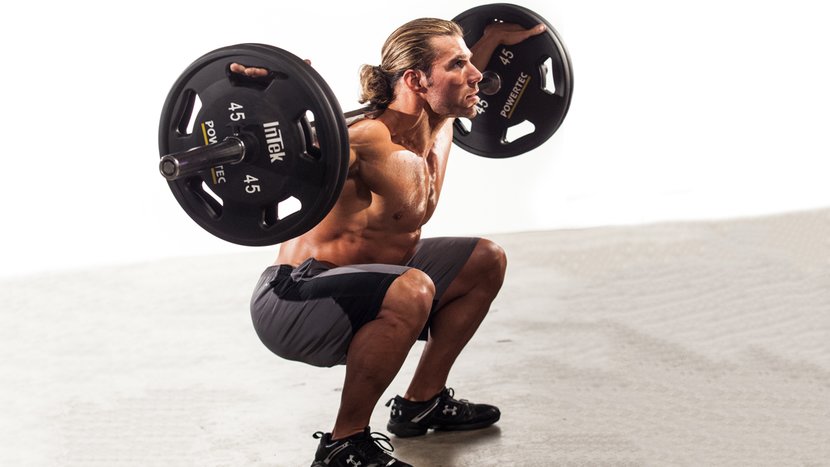

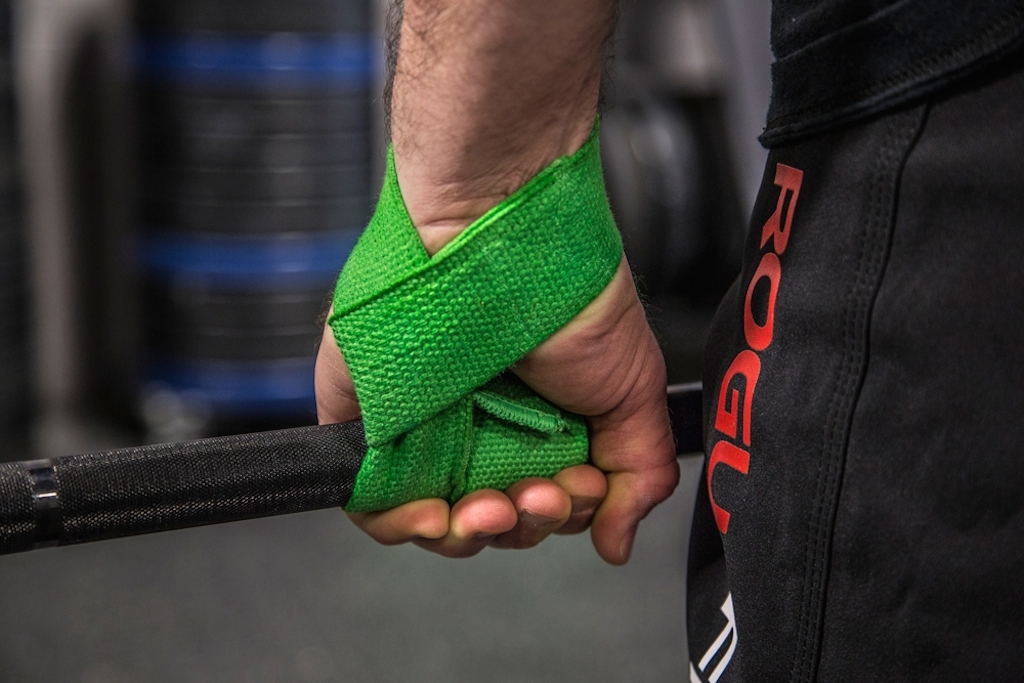
If you want to have a healthy, long life focus on overall strength. Squats, deadlifts, odd-object carries etc. If you're new to lifting, have someone who isn't show you proper form. Or just read Starting Strength by Mark Rippetoe. Its the bible of heavy lifts.
Source: I can deadlift more than 3 times my bodyweight while still having a 7 min mile.