This reads a lot like GB News announcing in Feb 2026 "The "biggest scandal in British history" [South Asian child grooming/rape gangs] has been blown wide open this week as an independent inquiry into the grooming gang epidemic heard harrowing testimonies. Rupert Lowe, Independent MP for Great Yarmouth, launched the proceedings on Monday"
Despite Andrew Norfolk being "2014 Journalist of the Year" for breaking the scandal in The Times and writing about it since 2010.
And despite a 2003 TV documentary reporting on an 18 month police and social services investigation, the Ivison Trust trying to bring it to national attention since 2010. the Independent writing about it in 2010. The former Home Secretary talking about it on Newsnight TV in 2011. A 2011 National Crime Agency (NCA)'s analysis. Convictions of Rochdale gang members in 2012. A 2013 NCA analysis. Rotherham council commissioning the independent Jay Report in 2013. A 2014 investigation into the Rotherham Council by the government. Andrew Norfolk winning two other awards for his reporting on it in 2014. The largest investigation into that kind of thing in UK history in 2017. A 2017 report from a thinktank. In 2017 a former Policing and Justice minister urging the Attorney General about it. A 2017 article in The Sun by the MP for Rotherham about it and the media attention that got. A 2020 report by the Home Office, a petition by The Independent with 130,000 signatures pressuring the Home Office to release their report. A 2021 investigation by The Times, A 2023 article by The Guardian, A 2023 announcement by Prime Minister Sunak starting a taskforce... but now The Right is trying to tell people that nobody has noticed it and the mainstream media isn't covering it.
But yeah, sure, the public "believe government grift every time" and weren't angry about the COVID PPE scandals, or HS2, or any of the rest of them, at all, only YOU noticed.
Electric, Gas distribution, British Petroleum, British Telecom, Bank of England, other banks like Bradford & Bingley, Royal Mail, regional water companies, shipbuilding, aeroplane, car, iron, and steel manufacturing, nuclear power, canals and waterways, coal mining, munitions factories, pubs, zinc smelting, airlines, Ordnance Survey Mapping, National Highways, BBC and Channel 4 broadcasting, The Crown Estate, Nuclear Laboratory, UK Hydrographic office, Meteorological Office, Genomics England, Student Loans Company, Civil Aviation Authority, Porton Biopharma...
Collectively (as in, the collective action problem):
- Areas with few/no cars are nicer to be in. To breathe, to talk quietly and hear others talking, to walk around safely.
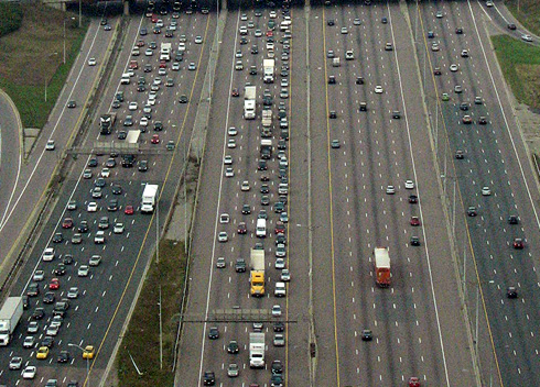
- Transport moves more people in less space and less overall investment. Toronto Highway 401[1] is an eighteen lane road and it moves fewer people per day than Metro line 1.
- Low car areas are better for local economies. People object to reducing traffic saying it will hurt local businesses, and the opposite is true. Where it's nice to exist outside of a car, that attracts people, and local businesses thrive.
- Reduced costs on health services from reduced pollution. Fewer doctor and hospital visits and prescriptions, for lung infections, breathing problems, asthsma and COPD in London after Low Emissions zones.
- Reduced environmental impact of fewer cars, fewer trips taken by car.
- Many people can't drive; all children, many injured or disabled people, many poorer people, many elderly people (can't or shouldn't), some people with e.g. DUI convictions. Some 20% of households in the UK have no access to a car. A matter of fairness and not prioritising the wealthy car owner.
Personally:
- No need to find parking, return to that carpark.
- Transit is more spacious. Being strapped into a carseat, elbows hitting doors, head hitting roof, knees hitting steering wheel, shins hitting dash, feet constrained in footwell, surrounded by explosives "for your protection" is a really unpleasant place to be.
- Less concentration needed. Driving requires constant attention. Even when transit is crowded, you don't have to do anything.
- Implemented well, transit takes priority over cars at turnings, crossings, junctions, roundabouts, and moves faster. Toronto trams do this especially poorly, apparently.
- Freedom. No need for a government approved license and ID. Not beholden to dragging a ton of steel boat-anchor around everywhere with you.
> “solid, convincing, extraordinary evidence or argumentation to support that.”
Just ordinary evidence. If there was a charity event which asked for a volunteer to organise drinks, and you volunteered, and then there were no drinks, and you said “I don’t owe you anything stop being entitled, if you want an event with drinks you can fork the idea and organise your own”, people would be unhappy and reasonably so. It’s not that you had a legal obligation to do that work, it’s that you told everyone you would and that stopped other people from doing it.
If rsync had no maintainer and someone publicly offered to take it on and maintain it, that would also block other people taking that spot. It stops people investing time effort and money into a fork or replacement to an abandoned project. If the volunteer then either didn’t do anything or wrecked it and said “I don’t owe you anything etc.” that would be bad in a similar way.
If you want to be able to tell people you are the maintainer, that the thing is maintained, and you get to control what happens to a widely used project, you can’t really stand by the position “why did people expect me to maintain it? I only told them I would maintain it, why would they believe me, that’s not fair”.
Make it clear that it’s abandonware and has no maintainer, and you can totally uphold the “not my problem, says so in the license, deal with it” position. But if your thing becomes popular then you should expect a company like RedHat to fork it into ‘redsync’ and run it their way as their project, not look to you as ‘upstream’ and sideline you completely. Which is what a lot of open source people say they want but don’t behave as if they want that. Probably because there actually is some prestige and power and status and reputation involved, even though people try to claim there isn’t.
Why would I need to? Nobody volunteered. In the analogy, you found something on a shelf somewhere and decided to depend on it. The person who put it on the shelf never agreed to support you in that endeavor.
Are different states. 'Maintenance' is not work-free or effortless, so the second sentence is explicitly volunteering to do some non-zero amount of work, right?
I don't see how it can be read any other way, you either have to argue that maintenance isn't work, or that "I am the maintainer" is not volunteering oneself into the role of doing that work.
You understand this is the opposite of your example before right?
It's like a business asking for volunteers, you saying you will, then the business demanding that you turn up when it suits them and you not being allowed to say "no"
If I have a garden in my yard and I say “I am the gardener of this garden”, what commitment have I made to you, a third party who just happened to be within earshot, about how much time I will spend working on the garden?
We're not talking about someone who "just happens to be within earshot" of something that is inside your private garden and not open to the public.
If you put a note on the public noticeboard saying "I have planted some things in this area of the public commons and I am the maintainer them" can you defend the idea that you are not voluntarily offering to maintain something?
Go on then, which part of my earlier post do you disagree with, specifically?
1. The difference between ‘abandoned’ and ‘maintained’ is that ‘maintained’ is bounded at the lower end to a greater-than-zero amount of maintenance work. Not a specific amount but necessarily >0. (Without that, “maintained” and “abandoned” become the same thing and that’s absurd).
2. “I am the maintainer” can be a voluntary statement, it’s not compelled (e.g. by a gun to the head).
3. The role of ‘maintainer’ is ‘doing that >0 amount of maintenance work’.
?
By the time we’re arguing how much maintenance, you’re agreeing with my position. In the case of your garden, if I saw it on fire I would think it reasonable to contact you about the fire given you are the gardener. I wouldn’t contact someone who was not the gardener.
Oh, you asked me if I disagreed with your point about gardens.
That one is pretty obvious because community gardens that want to enforce a floor on amount of maintenance include that in rules that you have to agree to before they give you some of their space.
I checked the whole terms of service for GitHub and they don’t have anything about how much work I have to do on a repo once I publish it for it to stay mine.
If you’re asking me which of those statements I disagree with, 1 and 3.
> "You are responsible for keeping your Account secure."
That is a non-zero amount of work.
> "You may not use GitHub in violation of export control or sanctions laws of the United States or any other applicable jurisdiction"
That requires you to be aware of those laws and put a non-zero amount of work into complying with them.
> "You will promptly notify GitHub by contacting us through the GitHub Support portal if you become aware of any unauthorized use of, or access to, our Service through your Account,"
That is a commitment to do some work.
> "For contractual purposes, you (1) consent to receive communications from us in an electronic form via the email address you have submitted"
That is a commitment to have a working email server/account.
If you don't do these things at times which are required, Github may close your account and your repo will go with it.
> "If you’re asking me which of those statements I disagree with, 1 and 3."
And on what grounds do you disagree? That "I will do something" is not saying that you will do something, or that "letting something rot" counts as "maintaining it"?
All sharing sites are not blocked, postimg and Reddit image hosting and Flickr and many more are not blocked.
The uk didn’t block sharing sites because of a threat to the social order, sharing sites blocked uk viewers because they don’t want to comply with uk laws like “don’t gather children’s personal data”.
No, they blocked the UK because it was either that or open themselves up to £18m in fine liability thanks to the Online Safety Act[0]. Social media sites which are unable or unwilling to operate strict, full-time content moderation have all blocked the UK because the alternative is being held punitively liable for abuse by bad actors. Pretty much a no brainer. (And that's without even getting into the quagmire of legitimate, consenting, age-gated adult content.)
I'm pretty sure it was in protest of a law saying they'd have to check everyone's ID. The BBC, being incredibly biased, obviously won't report this correctly.
Imgur were found to be in breach of the data collection laws before any "you must check IDs" laws were even discussed in parliament, let alone passed, where the guidance was pretty much "Don't get caught actively selling data you already know is from children". And even the punishment was pretty much writing a document of "we'll try not to do it quite so obviously next time", but they refused to do even that.
The "implied" link between their fines, them rejecting UK connections, and any new laws is very much a PR thing from imgur.
All the breathless online reporting seems to miss just how toothless the law was, and they still failed at following it.
Like I think the new verification laws are an unworkable mess at best, written by people with an idea similar to believing they could "ban one specific species of fish from UK territorial waters" by throwing the odd grenade in, but they're rather unrelated to what imgur actually did.
“Reflections on trusting trust” is the paper that posits a compiler which is edited once so that when it compiles a program, it adds a security vulnerability to it, and when it compiles it’s own source code, it adds this edit into itself. Then it is used to compile its own source code once. Then this edit is removed.
Now any study of the program or compiler source code will not show any vulnerability, but compiling the program will make a vulnerable program, and recompiling the compiler from its clean source code will not fix the situation.
This carrying down of a pattern which is not written down anywhere, a flaming torch lighting a torch lighting a torch, is analogous to four billion years of life on Earth. We talk like DNA is an everything-code that defines a human and a human brain, but it’s the implicit behaviour of cells (‘compiler’) and the mechanisms inside them which interpret DNA. The unbroken chain of life getting more and more complex and never being restarted from scratch, with the behaviours not written down anywhere for us to study. How does DNA arrange for x, y, z to happen? Maybe it doesn’t at all.
Accidentally stumbling on a mechanism that is simple enough to be recreated with every human birth might be possible, accidentally stumbling on a mechanism that took evolution billions of years to find and which it has hung onto by copying it and has never recreated it from scratch, could be much less likely, in a much bigger search space.
> Accidentally stumbling on a mechanism that is simple enough to be recreated with every human birth might be possible, accidentally stumbling on a mechanism that took evolution billions of years to find and which it has hung onto by copying it and has never recreated it from scratch, could be much less likely, in a much bigger search space.
Maybe, but you could make the same argument about anything artificial.
I don't know what point you're making; I'm making the point that it might be harder to discover what makes humans human, than is often suggested. You can't make the same claim about "anything artificial", we know how to dry muddy clay into clay bricks and stack them into a brick wall, and that can be taught from scratch to new people in hours.
You can make a similar argument with a company like ASML where their secret sauce is the organisational ability to fine-tune 100,000 components into a precision Silicon-wafer etching machine. You're far more likely to accidentally stumble upon "how to recreate a mud hut" than "how to recreate ASML". Okay, and...?
Man: “We measure that the mountain is gone, its mass-loss has measurably changed Earth’s orbit, weather patterns have changed, visually it’s not there anymore, we can walk though the space where it used to be.”
God: “Where is the mass of the mountain, and how did I make it disappear?”
Man: “God only knows! Pardon me; If I saw you do magic and can measure and test it, then that means it wasn’t magic. Internet people said so.”
God: “that doesn’t sound like a satisfying explanation”
Man: “it didn’t sound like a satisfying claim when it was just words on the internet either, but what can you do?”
God: “I’m God I can do anything”
Man: “can you make a boulder so heavy you can’t lift it?”
God: “yes”
Man: “how?”
God: “haven’t we just gone over showing you that I can do ‘impossible’ things, and you seeing them happen with your own eyes, and still refusing to accept?”
Any documented examples of these disappearing mountains?
We do have examples of billions upon billions of tonnes of iron being moved that have altered (slightly) the spin axis, also examples of ground water pumping at scales that have done the same .. but I'm unaware of any mountain sized objects that have vanished overnight.
No, none. The point is not to claim that magic exists, but to to show the illogic in the claim “if magic exists then that makes it science”.
“Nothing happens unless it has an explanation within the laws of physics” is an assumption; if it was broken then it would be broken. The mountain would be inexplicably gone, not explicably gone.
I think what the comment tries to express is the well-trodden "if we can control magic then that makes it science", while the original conversation really was "what if God controls magic".
In that hypothetical, there could be testable proof of "a magic event occurred" without magic becoming part of science.
Sure, and I appreciate the science behind your blank nom de guerre.
That said, in the cut and thrust of conversation and or debate the example by dialogue isn't perhaps as clear cut a device as it may have seemed from your keyboard.
This doesn’t seem related to my comment. Did you mean to reply to me upthread?
Saying ~“maybe it’s not ok to do <thing> but <reasons they might do thing>” is nothing like your example and does imply it’s acceptable to the speaker to sometimes do that thing.
But we’re past that now because the person I was discussing this with has gone ahead and clarified that telling an open source maintainer to please stop fucking up isn’t an angry comment.


reply