>My guess is that they're angling for an acquisition.
This is what I've thought was going to happen ever since they publicized their efforts. They probably don't have the money to train large models themselves, might as well get a nice chunk of change by being acquired by someone who already has said large models running.
As someone who knows admittedly knows nothing about startup funding rounds, how many more rounds of funding can they do before an IPO? Is it effectively infinite?
Going off the other reply, I wonder if a highly-active secondary market means that companies can raise series [A-Z]+ rounds effectively forever, where each "round" just refers to a giant purchase of shares under strict company supervision. Is this the new game for startups?
I can't speak for the specific case of Stripe, but it's fairly common for private companies to have a "tender offer" in which employees have the opportunity to sell some portion of their equity. This is often done in conjunction with a new investment round.
There's a newish term for this: RLO, Recurring Liquidity Opportunity. These are tender offers at some recurring interval. Even some companies that have a shorter lifespan (say 7 years) offer this.
I believe Databricks series L round raised $4B in late 2025, but earlier this year they raised another $5B so technically they've maybe completed series M round and are "on" series N round now? The press releases are a bit confusing to me.
It's semantics, but the latest raise might have been a follow-on to Series M, not a new round (to be clear, I know nothing about their finances, just speaking from experience at another company).
I imagine there are ways for existing investors to achieve liquidity while still raising venture funding. But an IPO is "the" liquidity event and I imagine there will be pressure from investors for that.
I also imagine that venture funding rounds have a lower ceiling than the public markets - but at these rounds I'm not so sure!
usually you would go through seed funding, the series a,b, and possibly a1 and b1. If you entered c or d territory it meant that you still had a chance but vc would be following you very closely. After d, you could raise money, but it would be under very unfavorable conditions
The number of rounds is irrelevant. Having crunched the data, what is relevant to terms is simply as you'd expect the rate of growth. The only reason it rarely happens with fast growing companies is that the liquidity of an IPO is attractive. As a result, companies doing many rounds are disproportionately companies that are performing too poorly to try and IPO.
they can do as many as they want. but at some point investors need/want to exit their positions and push for an IPO. That point is different for every company.
Miami? Have you checked home insurance rates lately? The thought of these NYC second home owners getting gutted by the next hurricane is rather amusing though.
The rich don't really care about insurance rates down here because they can a) pay them, b) tend to gravitate towards newer buildings that have better protection and c) have the money to retrofit older buildings with the necessary protection to lower insurance rates. Miami has the strictest hurricane codes in the country, so while there's a possibility that they may get gutted, it's probably going to be less than people expect.
I live in FL so if you have questions about insurance feel free to ask.
But the people who can easily afford the insurance in Florida can afford the new tax as well. And as an added bonus, they don't have to live in Florida!
But in all seriousness, they all already own homes in Florida.
So they can pay the higher insurance without a thought, they can pay for the relocation across the country, but they're unwilling to finance public services for the city they live in.
Homes built after 2002 in Florida are not gutted by hurricanes, they are hurricane resistant under updated building codes. The codes were even strengthened in subsequent years. Example, FEMA found no structural failure from wind in modern-code homes for Hurricane Ian.
>I don't believe there's that big of a market for local AI. Most people don't care that much,
I agree that the market for local AI is basically limited to nerds at this point, but that's because nobody's really explained why local AI is a good thing and also because the vast majority of people need the $20 paid plan at most. How much time and money would it take to get something half as good as OpenAIs products running locally?
It will take another [human] generation before AI is well integrated into everyone's daily lives where people will expect a local model handling things for them. I don't think the killer app has arrived yet (OC is a hint of what is to come).
Canada passed a similar bill a few years ago causing meta to stop showing Canadian news content on their platforms. It didn’t really impact them financially or user wise. So the same thing will probably happen in Italy.
Canadian news might've been easier to replace with American news outlets due to the deep ties between the two and the shared language. I doubt this would be the case for Italian news.
No, ads make them money. Users see the ads because they view their feeds.
It’s been proven in other markets that removing News from the feed doesn’t decrease engagement. Meta will continue to make money, and Italian news sites will see their traffic vanish.
Turns out they’re simply not valuable in the way they used to be, and country after country is learning this
Meta does this in Canada. These same media outlets need to be funded by the government to survive, and as such treats the government with kid gloves, very little criticism, deflection, bias etc.
So I’d say that deal is working well for both the legacy media & the Canadian government.
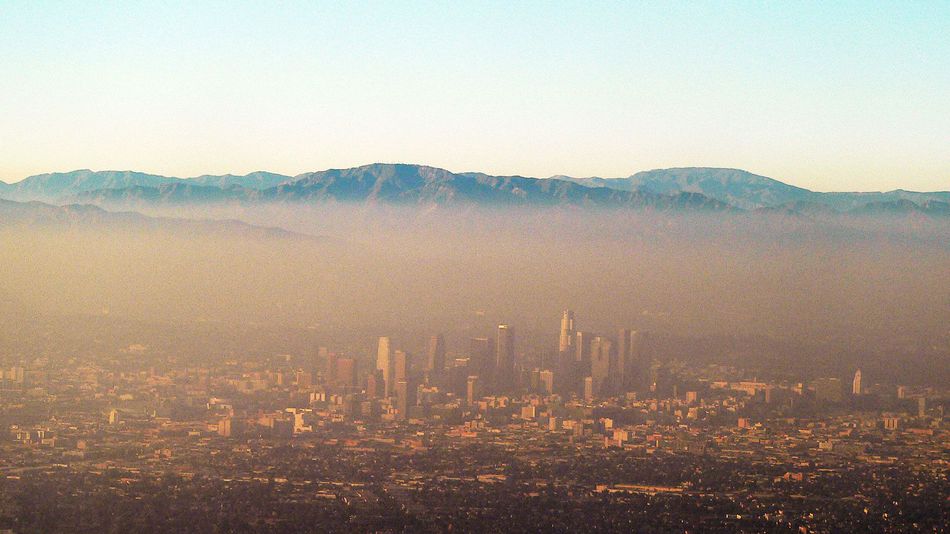
Those rules around special gasoline were made when both federal and California car exhaust regulations were much looser than today, and electric cars were a complete pipe dream. I've seen estimates ranging for savings from $.25 to $1 per gallon if California dropped the requirements.
>Would you really want to hurt children for cheaper gas?
You didn't really address his main point. Will this lead to higher levels of pollution that will have real health consequences? Oddly you suggest it's not valid to raise concerns around health consequences.
"Poor air quality does not affect all parts of LA equally. Communities of color and low-income residents are disproportionately impacted by polluted air. In certain areas, traffic-related emissions, including nitrogen oxides (NOx), carbon monoxide (CO), and benzene concentrations, are up to 60% higher.
A study led by UCLA found that the air in disadvantaged neighborhoods contained not only more fine particulate matter, but also more toxic particulates as well. Places facing the most socioeconomic disadvantages “experience about 65% higher toxicity than people in the most advantaged group,” according to Suzanne Paulson, UCLA professor of atmospheric and oceanic sciences and the senior author of the study.
These same groups often have less access to health care and good nutrition, putting them at an even greater health risk. Everyone deserves to breathe clean air, and communities of color and low-income residents are unfortunately facing the worst of LA’s notorious smog."
Saving a buck at the expense of someone with no control of their situation is a choice.


This is what I've thought was going to happen ever since they publicized their efforts. They probably don't have the money to train large models themselves, might as well get a nice chunk of change by being acquired by someone who already has said large models running.
reply